

What Are Gum Pockets? What Dentists Measure During a Periodontal Exam
Learn what periodontal pocket measurements mean and why dentists consider several gum-health findings together.
Written By Escrito Por
Gateway Dental

If you have heard a hygienist call out numbers such as “two, three, four” while checking your gums, those numbers are usually periodontal pocket measurements.
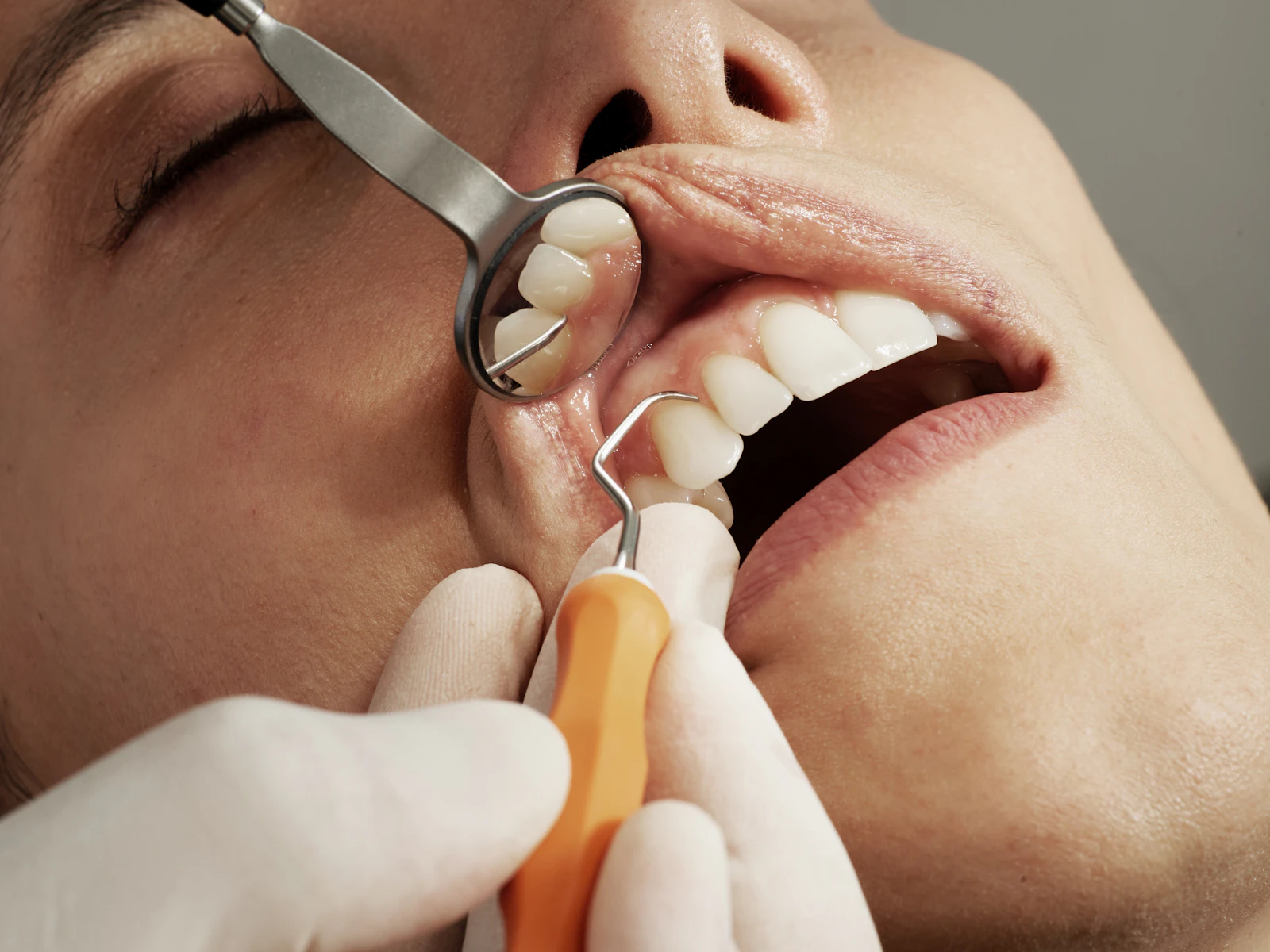
The National Institute of Dental and Craniofacial Research explains that dental professionals use a small periodontal probe to measure spaces between teeth and gums. Healthy spaces are often about 1 to 3 millimeters; deeper measurements can be a sign of periodontal disease. NIDCR: Periodontal Disease
A single number, however, does not tell the whole story.
What is a periodontal pocket?
Healthy gum tissue fits closely around a tooth. When inflammation and periodontal disease damage the attachment between gum and tooth, the space can become deeper and harder to clean.
Measurements are taken at several points because disease is not always uniform around a tooth. The clinician may also record bleeding during probing.
Does a deeper number automatically mean gum disease?
Not by itself. Dentists also consider gum inflammation, bleeding, recession, attachment levels, plaque and tartar, tooth mobility, bone levels on X-rays, medical history, tobacco exposure, diabetes, and other risks.
The American Academy of Periodontology recommends a comprehensive periodontal evaluation that looks at teeth, plaque, gums, bite, bone structure, and individual risk factors together. AAP: Comprehensive Periodontal Evaluation
If your gums bleed often, our bleeding-gums guide explains why persistent bleeding deserves evaluation.
How is recession different?
Recession means the gum margin has moved, exposing more of the tooth or root. A patient can have recession without a very deep pocket, so dentists may record both measurements.
Our receding-gums guide explains why the visible gumline is only one part of periodontal health.
What treatment is used for deeper pockets?
Treatment depends on the diagnosis and severity. It may include improved plaque control, professional cleaning, scaling and root planing, periodontal maintenance, or additional periodontal care.
A deeper measurement does not mean every patient needs the same treatment. Our deep cleaning vs. regular cleaning guide explains why the diagnosis determines the cleaning approach.
Gateway Dental offers oral hygiene and gum disease treatment services. Contact Coral Way or Hialeah if you have been told that you have deeper pockets or are due for a periodontal evaluation.
Continue learning about your dental care. Siga aprendiendo sobre su cuidado dental.
Explore more Gateway Dental articles related to patient education, dental visits, and treatment planning. Explore más artículos de Gateway Dental relacionados con educación del paciente, visitas dentales y planificación de tratamiento.

Gum Health
Periodontal Maintenance After Gum Treatment: Why Follow-Up Visits Matter
Finished a deep cleaning or gum-disease treatment? Learn what periodontal maintenance involves, why follow-up care matters, and which questions to ask.

Gum Health
Can Receding Gums Grow Back? Causes, Treatment, and When to See a Dentist
Learn why gums recede, whether lost gum tissue can grow back, what treatment can do, and when exposed roots or sensitivity need a dental evaluation.
Gum Health
Deep Cleaning vs. Regular Dental Cleaning: How Dentists Decide Which You Need
Learn the difference between a regular dental cleaning and a deep cleaning with scaling and root planing, why gum pocket measurements matter, and what to expect after treatment.
Our team is here to help you understand your options. Nuestro equipo está aquí para ayudarle a entender sus opciones.
Call Gateway Dental to schedule a visit or ask questions about services, insurance, financing, or next steps. Llame a Gateway Dental para agendar una visita o hacer preguntas sobre servicios, seguros, financiamiento o próximos pasos.