

Can Receding Gums Grow Back? Causes, Treatment, and When to See a Dentist
Learn why gums recede, whether lost gum tissue can grow back, what treatment can do, and when exposed roots or sensitivity need a dental evaluation.
Written By Escrito Por
Gateway Dental
Reviewed By Revisado Por
Gateway Dental Team

If your teeth seem to look longer than they used to, or you can see more of the tooth near the gumline, you may be noticing gum recession.
A common question is whether the gums can simply grow back once they have pulled away from a tooth. The short answer is important:
True gum recession generally does not grow back on its own. Treatment can often help stop the problem from progressing, reduce inflammation or sensitivity, protect exposed roots, and—in selected cases—cover exposed root surfaces with periodontal procedures such as gum grafting.
That does not mean every area of recession needs surgery. The right treatment depends on why the gumline changed, whether gum disease is present, how much root is exposed, whether the area is stable, and whether there are symptoms such as sensitivity, bleeding, or loose teeth.
At Gateway Dental, we help patients in Miami, Hialeah, and surrounding Miami-Dade communities understand whether a changing gumline is a cosmetic concern, a sign of periodontal disease, a brushing-related problem, or part of a more complex dental issue. This guide explains what gum recession is, what can and cannot reverse, and what dentists evaluate before recommending treatment.
What are receding gums?
Gum recession occurs when the edge of the gum tissue moves away from its previous position on a tooth, exposing more of the tooth surface and sometimes part of the root.
The tooth root is normally protected by gum tissue. When that root becomes exposed, several things may change:
- The tooth may look longer than nearby teeth
- The gumline may appear uneven
- The exposed area may be more sensitive to cold, touch, sweets, or brushing
- The root surface may be more vulnerable to wear and decay
- Small spaces or dark triangles may become more noticeable
- The area may be harder to keep clean comfortably
Recession can affect one tooth, several teeth, or a broader area of the mouth.
It is also possible to have gum recession without pain. That is one reason changes in the gumline are worth mentioning during a dental exam even if the teeth feel normal.
Can receding gums grow back naturally?
Not in the way many people mean when they ask this question.
When gum tissue has truly receded and the root surface is exposed, the gum margin generally does not regenerate back to its original position on its own.
This is different from gingivitis, the earliest stage of gum disease. Gingivitis causes gums to become inflamed, red, swollen, and prone to bleeding. Because the supporting tissues have not yet been permanently damaged, gingivitis can often improve substantially when plaque is controlled and professional care is provided.
With true recession, however, the issue is not simply swelling or inflammation. The position of the gum tissue has changed.
That distinction is why a patient may hear that early gum disease can be reversed while also being told that receded gum tissue does not simply regrow.
If you are noticing bleeding as well as a changing gumline, our guide on why gums bleed during brushing explains how gingivitis and periodontal disease can contribute.
Why do gums recede?
Gum recession can have more than one contributing factor. A dental exam helps determine which factors matter in your specific case.
1. Periodontal disease
Periodontal disease is one of the most important conditions dentists evaluate when gums begin pulling away from the teeth.
Plaque that remains around the gumline can harden into tartar. Bacteria and inflammation can then affect the tissues that support the teeth. As periodontal disease progresses, the gums may pull away from the teeth and deeper pockets can form around the roots.
Advanced periodontal disease can also involve loss of the bone that supports the teeth.
If periodontal inflammation is contributing to recession, treating the disease is more important than focusing only on how the gumline looks.
Gateway Dental offers laser gum disease treatment for appropriate periodontal concerns. Laser treatment may be part of managing gum disease in selected cases, but it should not be confused with a procedure that automatically regrows receded gum tissue. The treatment plan depends on the periodontal diagnosis.
2. Brushing too aggressively
Brushing is essential, but more pressure does not mean cleaner teeth.
Using excessive force or repeatedly scrubbing the gumline can irritate and damage the tissues over time. A hard-bristled toothbrush can also be unnecessarily abrasive for many patients.
A dentist or hygienist can show you a gentler brushing technique and help you choose a soft-bristled toothbrush that still removes plaque effectively.
If you are worried that brushing less aggressively will leave your teeth dirty, remember that good plaque control depends on technique and consistency, not force.
3. Tooth position, bite forces, and tissue anatomy
Not every case of gum recession is caused by gum disease.
During an exam, a dentist may also look at:
- The position of the affected tooth in the dental arch
- How thin or thick the gum tissue is around that area
- The way the teeth meet when you bite
- Signs of clenching or grinding
- Previous orthodontic movement
- Existing crowns, fillings, or other restorations near the gumline
- Repeated local trauma or irritation
These findings help explain why one tooth may recede while neighboring teeth appear stable.
If grinding or clenching is part of the overall picture, our guide on night guards for teeth grinding explains the signs dentists evaluate.
4. Tobacco use and periodontal risk
Smoking and other tobacco use are major risk factors for periodontal disease and can also make gum treatment less successful.
Tobacco can affect the body’s ability to respond to infection and heal after periodontal treatment. If recession occurs together with gum disease, smoking status becomes an important part of treatment planning.
What are the signs of gum recession?
Some cases are obvious, while others are discovered during a routine dental visit.
Possible signs include:
- Teeth that look longer than they used to
- A visible yellowish or darker area near the gumline where the root is exposed
- Increased sensitivity to cold, heat, sweets, or brushing
- A small notch or indentation near the gumline
- An uneven gumline
- Bleeding, redness, or swelling around the affected teeth
- Persistent bad breath when gum disease is present
- Loose teeth in more advanced periodontal cases
- Changes in the spaces between teeth
Sensitivity alone does not prove that your gums are receding. Tooth decay, cracks, worn enamel, damaged fillings, and problems inside the tooth can also cause sensitivity.
Our guide on why teeth become sensitive to cold explains some of those other possibilities.
Does gum recession always mean gum disease?
No.
Gum disease is an important cause, but a receding gumline does not automatically mean you have periodontitis.
That is why visual inspection alone is not enough. Dentists look at the entire periodontal picture, including inflammation, bleeding, pocket depths, bone levels, plaque and tartar, tooth mobility, root exposure, and the pattern of recession.
A patient with one isolated area of recession and healthy periodontal tissues may need a very different treatment plan than a patient with recession across several teeth, deep periodontal pockets, and bone loss.
How does a dentist evaluate receding gums?
A gum-recession evaluation may include:
- Looking at where the gumline has moved and how much root is exposed
- Checking for plaque and tartar buildup
- Measuring the spaces around the teeth with a periodontal probe
- Checking for bleeding or inflammation
- Evaluating tooth mobility
- Reviewing brushing habits and oral-hygiene technique
- Looking for signs of clenching, grinding, or other local stress
- Reviewing existing dental restorations
- Taking dental X-rays when needed to evaluate supporting bone
The purpose is not simply to measure how many millimeters the gums have moved. The more important question is why the recession occurred and whether it is stable or progressing.
Can a deep cleaning fix receding gums?
A deep cleaning—also called scaling and root planing—can be very important when periodontal disease is present, but it does not automatically move receded gum tissue back over an exposed root.
Scaling and root planing removes plaque, tartar, and bacterial deposits from below the gumline and smooths the root surfaces so inflamed periodontal tissues can heal more effectively.
If gum disease is contributing to recession, controlling that disease can help reduce inflammation and slow additional damage.
Our guide on deep cleaning versus a regular dental cleaning explains why dentists recommend one or the other based on gum health and periodontal findings.
Can laser gum treatment regrow receding gums?
Laser periodontal therapy and gum grafting are different types of treatment with different goals.
Laser treatment may be used in selected periodontal cases to help manage diseased or inflamed gum tissues. If periodontal disease is one of the reasons the gumline is deteriorating, controlling that disease can be an important part of stabilizing the area.
However, patients should not assume that a laser procedure will simply regenerate a lost gum margin over an exposed root.
When the goal is specifically to increase root coverage or add tissue to an area with true recession, a dentist or periodontist may discuss a gum graft or another root-coverage procedure instead.
The correct procedure depends on the amount and pattern of recession, the condition of the surrounding bone and gums, the tooth position, and the patient’s overall periodontal health.
What is a gum graft?
A gum graft is a periodontal surgical procedure used to add or reposition tissue around an area of recession.
Depending on the technique, tissue may come from another area of the patient’s mouth or from another approved graft source. The tissue is positioned to improve coverage and support around the exposed root.
A gum graft may be considered to:
- Cover an exposed root
- Reduce the risk of additional recession
- Protect a vulnerable root surface
- Reduce sensitivity in selected cases
- Improve the thickness of the gum tissue
- Improve the appearance of an uneven gumline
Not every patient with recession needs grafting, and complete root coverage is not guaranteed in every case. Results depend on the recession pattern, bone support, tissue anatomy, tooth position, smoking status, home care, and other clinical factors.
A general dentist can identify recession and determine whether monitoring, local treatment, periodontal therapy, or referral to a periodontist is appropriate.
What if the exposed root is sensitive?
Root exposure can make a tooth more sensitive because root surfaces are not protected by enamel in the same way the visible crown of the tooth is.
Depending on the cause and severity, a dentist may recommend options such as:
- A toothpaste formulated for sensitive teeth
- Fluoride treatment when appropriate
- Changes in brushing technique
- Treatment of gum inflammation
- A protective dental restoration in selected areas of root wear or decay
- Periodontal root-coverage treatment when indicated
The goal is to manage the reason for the sensitivity rather than simply masking pain indefinitely.
If sensitivity is severe, lingering, spontaneous, or associated with pain when biting, the tooth should be evaluated for other problems as well.
Can receding gums cause cavities?
Exposed root surfaces can be more vulnerable to decay than enamel-covered tooth surfaces.
That does not mean every exposed root will develop a cavity. Good plaque control, appropriate fluoride exposure, diet, saliva, and regular dental care all influence risk.
Still, recession can create areas that require extra attention during brushing and professional exams.
If decay does develop, the treatment depends on how early it is detected. Our guide on whether early tooth decay can be reversed explains the difference between early mineral loss and a true cavity that has already created structural damage.
Can you stop gum recession from getting worse?
Often, the first goal of treatment is stabilization.
Helpful steps may include:
- Brush twice daily with a soft-bristled toothbrush and appropriate pressure
- Clean between the teeth every day
- Keep regular professional dental visits
- Treat gingivitis or periodontitis when present
- Avoid tobacco products
- Address grinding, clenching, or other contributing factors when identified
- Follow periodontal maintenance recommendations if you have a history of gum disease
- Have changing or sensitive areas evaluated rather than waiting for symptoms to become severe
Gateway Dental’s oral hygiene services and preventive dentistry services can help identify plaque-control problems and other changes before they become more difficult to manage.
Should you use a special toothpaste for receding gums?
A toothpaste can help with some consequences of recession, but it cannot physically regrow a lost gum margin.
For example, a dentist may recommend a sensitivity toothpaste if an exposed root reacts to cold. Fluoride toothpaste also remains important for cavity prevention, especially when root surfaces are exposed.
Be cautious with products that claim to “regrow gums” or permanently reverse recession without professional evaluation. Improving oral hygiene can reduce inflammation, and healthier gums may look and feel better, but that is not the same as regenerating tissue that has truly receded.
When should you see a dentist for receding gums?
Schedule an evaluation if you notice:
- A gumline that is visibly changing
- Roots becoming exposed
- New or increasing tooth sensitivity
- Repeated bleeding or swelling
- A tooth that looks noticeably longer than before
- Gum recession around several teeth
- Pain or difficulty brushing an exposed area
- Persistent bad breath together with gum changes
- A loose tooth
- A restoration near the gumline that feels rough, traps food, or is difficult to clean
You should seek prompt dental care if recession appears to be progressing quickly, if a tooth becomes mobile, or if there is significant swelling, drainage, or severe pain.
Questions to ask your dentist about gum recession
If your dentist identifies recession, useful questions include:
- Is this true gum recession or mainly inflammation?
- Do I have gingivitis or periodontitis?
- How much root is exposed?
- Is the recession stable or getting worse?
- Could my brushing technique be contributing?
- Are there signs of grinding or bite-related stress?
- Do I need a regular cleaning or periodontal treatment?
- Would a gum graft or periodontist evaluation be appropriate?
- Is the exposed root at higher risk for decay or wear?
- What should I change in my home-care routine?
- How often should this area be monitored?
Understanding the cause makes it easier to understand why a specific treatment is being recommended.
Helpful next steps
If you are concerned about gum recession, these Gateway Dental resources may help:
- Laser gum disease treatment
- Oral hygiene
- Preventive dentistry
- Dental insurance information
- Dental financing options
- Gateway Dental locations
- Why gums bleed when brushing
- Deep cleaning vs. regular cleaning
- Cold tooth sensitivity guide
- Night guards for teeth grinding
- Can a cavity heal on its own?
Concerned that your gums are pulling away from your teeth?
Receding gums are not something you have to diagnose from a mirror or an online photo.
A dental exam can help determine whether the change is related to periodontal disease, brushing habits, tooth position, exposed-root wear, or another factor. From there, the goal may be as simple as correcting technique and monitoring the area—or it may involve periodontal treatment or referral for a root-coverage procedure.
Gateway Dental serves patients at our Coral Way and Hialeah locations. Schedule a visit at the office that works best for you so our team can evaluate your gum health, explain what is happening, and review the treatment options that fit your situation.
Continue learning about your dental care. Siga aprendiendo sobre su cuidado dental.
Explore more Gateway Dental articles related to patient education, dental visits, and treatment planning. Explore más artículos de Gateway Dental relacionados con educación del paciente, visitas dentales y planificación de tratamiento.

Gum Health
What Are Gum Pockets? What Dentists Measure During a Periodontal Exam
Learn what periodontal pocket measurements mean and why dentists consider several gum-health findings together.

Gum Health
Periodontal Maintenance After Gum Treatment: Why Follow-Up Visits Matter
Finished a deep cleaning or gum-disease treatment? Learn what periodontal maintenance involves, why follow-up care matters, and which questions to ask.
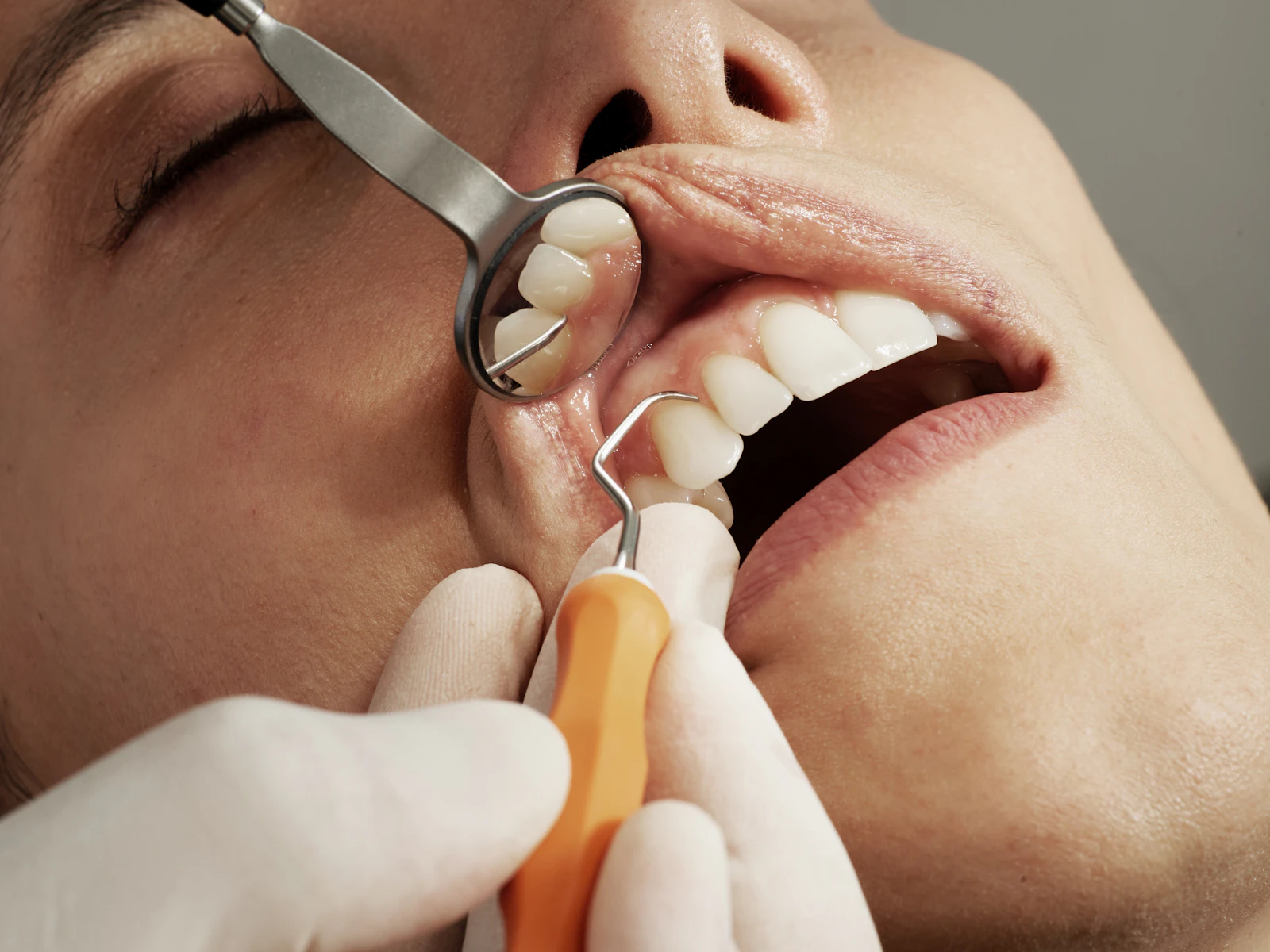
Gum Health
Deep Cleaning vs. Regular Dental Cleaning: How Dentists Decide Which You Need
Learn the difference between a regular dental cleaning and a deep cleaning with scaling and root planing, why gum pocket measurements matter, and what to expect after treatment.
Our team is here to help you understand your options. Nuestro equipo está aquí para ayudarle a entender sus opciones.
Call Gateway Dental to schedule a visit or ask questions about services, insurance, financing, or next steps. Llame a Gateway Dental para agendar una visita o hacer preguntas sobre servicios, seguros, financiamiento o próximos pasos.