

Deep Cleaning vs. Regular Dental Cleaning: How Dentists Decide Which You Need
Learn the difference between a regular dental cleaning and a deep cleaning with scaling and root planing, why gum pocket measurements matter, and what to expect after treatment.
Written By Escrito Por
Gateway Dental
Reviewed By Revisado Por
Gateway Dental Team
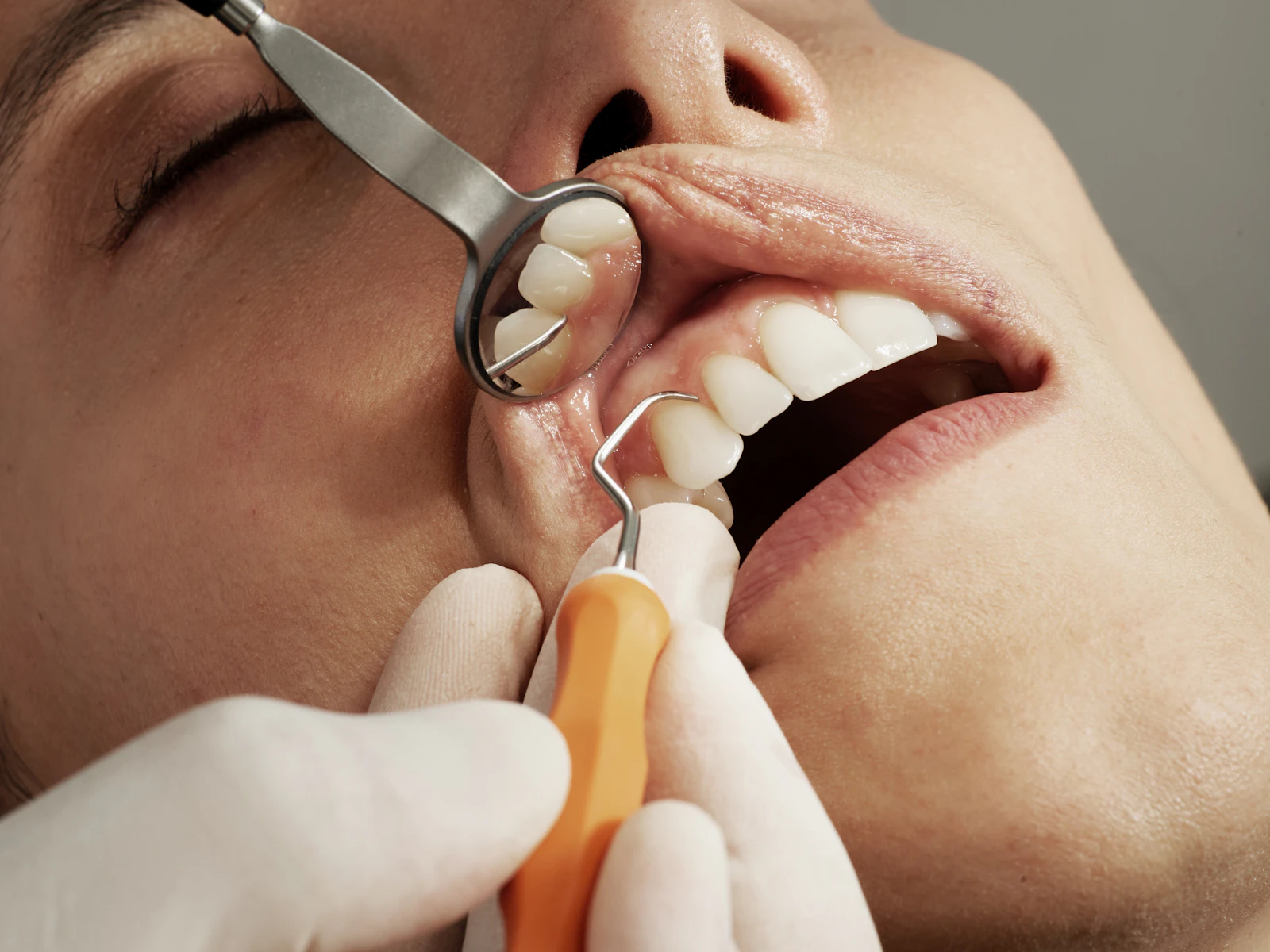
If your dentist tells you that you need a deep cleaning, you may wonder why a regular cleaning is not enough. Both appointments remove plaque and tartar, but they are not the same procedure and they are not used for the same oral-health situation.
A regular dental cleaning is preventive care for teeth and gums that do not show the attachment and bone loss associated with periodontitis. A deep cleaning, also called scaling and root planing, is a nonsurgical periodontal treatment used when gum disease has created deeper spaces around the teeth where bacteria and tartar can collect below the gumline.
At Gateway Dental, patients in Miami, Hialeah, and surrounding Miami-Dade communities can have their gums evaluated before a cleaning recommendation is made. The goal is not to choose the more extensive procedure automatically. It is to match treatment to what the dentist and hygienist actually find during the exam.
This guide explains the difference between regular cleaning and deep cleaning, how dentists decide which one may be appropriate, what scaling and root planing involves, and what usually happens after treatment.
What is a regular dental cleaning?
A routine professional cleaning, sometimes called a prophylaxis, is preventive care intended to remove plaque, tartar, and stains from the teeth when the supporting tissues are generally healthy enough for routine maintenance.
During a regular cleaning, the dental team may:
- Examine the teeth and gums
- Remove plaque and tartar from accessible tooth surfaces
- Clean around the gumline
- Polish the teeth
- Review brushing and interdental-cleaning techniques
- Discuss areas that need closer home care
- Recommend the timing of your next preventive visit
Regular cleanings are an important part of maintaining oral health, but they are not designed to treat established periodontitis below the gumline.
If you are wondering how often routine professional care may be recommended, read our guide on how often you should get a dental cleaning.
What is a deep dental cleaning?
A deep cleaning is the patient-friendly name commonly used for scaling and root planing.
The American Dental Association describes scaling and root planing as a cleaning below the gumline used to treat gum disease. The procedure generally has two parts:
Scaling removes plaque and hardened tartar from the tooth surfaces above and below the gumline, including deposits inside periodontal pockets.
Root planing cleans and smooths the root surfaces so the gums have a healthier surface against which to heal.
Scaling and root planing may be completed in more than one visit depending on how much of the mouth requires treatment, the depth of the periodontal pockets, patient comfort, and the treatment plan. Local anesthetic may be used when appropriate.
Why would a regular cleaning not be enough?
The key difference is where the disease and buildup are located.
When gums are healthy, the space between the gum tissue and the tooth is shallow enough to maintain with home care and routine professional cleaning. With periodontitis, the supporting tissues can become damaged and the pockets around teeth can deepen.
Plaque and tartar can then remain below the gumline where a routine cleaning does not adequately address the periodontal disease.
In that situation, simply polishing the visible tooth surfaces would not treat the deeper areas that need periodontal therapy.
This is why a deep cleaning should be based on a periodontal diagnosis rather than offered as an interchangeable upgrade to a regular cleaning.
How does a dentist decide whether you need a deep cleaning?
Dentists and dental hygienists use several pieces of information together. A recommendation should not be based on one symptom alone.
Gum pocket measurements
During a periodontal evaluation, the dental professional may use a small measuring instrument called a periodontal probe to measure the spaces around the teeth.
The National Institute of Dental and Craniofacial Research notes that healthy periodontal pockets are commonly around 1 to 3 millimeters. Deeper measurements can be a sign of periodontal disease, especially when they occur with other findings such as bleeding, attachment loss, or bone loss.
A pocket number by itself does not tell the entire story, but periodontal charting helps show where inflammation and deeper disease may be present.
Bleeding and inflammation
Red, swollen, tender, or bleeding gums can be warning signs of gum disease. Bleeding is important information, but it does not automatically mean you need scaling and root planing.
Gingivitis can cause bleeding without the bone and attachment loss seen in periodontitis. Your dental team needs to determine whether the inflammation is limited to the gums or whether deeper supporting structures have been affected.
If bleeding gums are one of the reasons you scheduled your appointment, our guide on why gums bleed when brushing explains common causes and what a dental evaluation may include.
Tartar below the gumline
Tartar, also called calculus, is hardened plaque that cannot be removed with normal brushing and flossing.
When deposits extend below the gumline into periodontal pockets, they can be difficult to reach without periodontal instrumentation. Their location and extent help the dental team determine whether routine preventive cleaning is enough or whether periodontal therapy is needed.
X-rays and bone support
Dental X-rays can help the dentist evaluate the bone supporting your teeth.
Periodontitis can cause loss of the bone and connective tissue that hold teeth in place. When periodontal charting and X-rays show attachment or bone loss, the treatment plan may differ from the plan for a patient who has gingivitis without deeper structural damage.
Your health history and risk factors
Your dental team may also review factors that can affect gum health and treatment response, including:
- Smoking or tobacco use
- Diabetes
- Certain medications
- Previous periodontal treatment
- A history of gum disease
- Oral-hygiene challenges
- Genetics and family history
- Changes in your overall health
These factors help your dentist understand your risk and determine the type of follow-up care that may be appropriate after treatment.
Gingivitis vs. periodontitis: why the distinction matters
People often use “gum disease” as one broad term, but gingivitis and periodontitis are not the same stage of disease.
Gingivitis is inflammation of the gums without the attachment and bone loss that define periodontitis. The gums may look red or swollen and may bleed easily.
Periodontitis involves damage to the tissues and bone that support the teeth. Periodontal pockets may deepen, the gums can recede, and teeth can eventually become loose if disease progresses.
The distinction matters because early gum inflammation may improve with professional cleaning and better plaque control, while periodontitis often requires treatment below the gumline such as scaling and root planing.
The CDC identifies scaling and root planing as a nonsurgical treatment that may be used for periodontitis.
What happens during scaling and root planing?
The exact process depends on which areas need treatment, but a typical appointment may include several steps.
1. Periodontal evaluation
The dental team reviews the periodontal charting, gum inflammation, tartar buildup, X-rays when indicated, and your health history.
2. Comfort and anesthesia planning
Deep cleaning works below the gumline and can involve sensitive areas. Local anesthesia may be used to help keep you comfortable during treatment.
3. Scaling below the gumline
The clinician removes plaque and calculus from tooth and root surfaces, including areas within periodontal pockets.
4. Root planing
The root surfaces are carefully cleaned and smoothed to remove deposits and create a healthier surface for the surrounding gum tissue.
5. Home-care instructions
You may receive personalized guidance for brushing, cleaning between the teeth, and caring for tender areas while your gums heal.
6. Re-evaluation
A follow-up visit allows the dental team to see how the gums responded, recheck inflammation and pocket depths when appropriate, and determine what maintenance schedule or additional periodontal care may be needed.
Does a deep cleaning hurt?
Scaling and root planing is commonly performed with local anesthesia when needed, so the treatment area can be numbed during the procedure.
After treatment, some patients experience temporary gum tenderness, mild soreness, or tooth sensitivity. The ADA notes that discomfort may last a short time and sensitivity can continue for several days in some patients.
Your dental team will give you instructions based on your specific treatment. Contact the office if pain, swelling, bleeding, or another symptom seems severe, is getting worse, or concerns you.
How many visits does a deep cleaning take?
There is no universal number of appointments.
Some patients need treatment in only selected areas. Others have periodontal disease affecting several sections of the mouth and may have treatment divided into multiple visits.
The schedule can depend on:
- How many teeth or areas require treatment
- How much tartar is present below the gumline
- Pocket depth and inflammation
- Patient comfort
- Whether local anesthesia is used
- The amount of time needed to clean each area thoroughly
Your dentist or hygienist should explain which areas are being treated and why before the procedure begins.
What is periodontal maintenance after a deep cleaning?
Scaling and root planing is not necessarily the end of periodontal care.
After active periodontal treatment, many patients need an ongoing maintenance schedule designed to control plaque and monitor the gums more closely than a routine preventive schedule.
Periodontal maintenance may include:
- Reviewing changes in gum health
- Measuring periodontal pockets when appropriate
- Removing plaque and tartar above and below the gumline
- Monitoring areas that previously had deeper pockets
- Reinforcing home-care techniques
- Evaluating whether additional periodontal treatment is needed
The interval is individualized. Patients with a history of periodontitis may need more frequent professional maintenance than patients with consistently healthy gums.
Is a deep cleaning the same as a regular cleaning done more thoroughly?
No. This is one of the most important misconceptions to clear up.
A deep cleaning is not simply a longer version of a routine cleaning. It is periodontal therapy directed below the gumline when the diagnosis and findings support that treatment.
That difference affects:
- The reason for treatment
- The areas being cleaned
- The clinical documentation
- Whether anesthesia may be needed
- Follow-up and maintenance recommendations
- How dental insurance may categorize the procedure
If you are unsure why scaling and root planing was recommended, ask the dental team to show you the periodontal charting, X-rays when relevant, and the specific areas of concern.
Will dental insurance cover a deep cleaning?
Coverage varies by dental plan.
Scaling and root planing is usually billed differently from a routine preventive cleaning because it is periodontal treatment. Your plan may have requirements related to diagnosis, periodontal charting, X-rays, deductibles, frequency limits, or the number of areas treated.
Insurance coverage is not the same thing as a clinical recommendation. Your dentist should recommend treatment based on your oral-health findings, while the insurance plan determines what portion of that treatment it may cover.
Gateway Dental can help review available benefit information and estimated patient responsibility. Visit our dental insurance information page and financing options page for more information.
Can a deep cleaning cure gum disease permanently?
Scaling and root planing can be an important first nonsurgical treatment for periodontitis, but it does not make a patient permanently immune to future periodontal problems.
Long-term control depends on several factors, including:
- Daily plaque removal at home
- Cleaning between the teeth
- Avoiding tobacco
- Managing relevant health conditions
- Keeping recommended periodontal maintenance visits
- Monitoring for recurrent inflammation or deeper pockets
Some patients respond well to nonsurgical therapy and maintenance. Others may need additional periodontal treatment or referral to a periodontist depending on disease severity and response to care.
Gateway Dental also offers laser gum treatment for appropriate periodontal concerns. The right treatment depends on the diagnosis and should be discussed after a clinical evaluation rather than chosen based only on the name of a procedure.
How can you reduce the chance of gum disease progressing?
Good home care and regular professional evaluation work together.
Helpful habits include:
- Brush twice a day with fluoride toothpaste
- Clean between the teeth every day using floss or another interdental method recommended by your dental professional
- Do not smoke or use tobacco
- Keep routine dental and periodontal appointments
- Tell your dentist about diabetes, medications, and health changes
- Seek evaluation for persistent bleeding, swelling, recession, loose teeth, or bad breath
Our oral hygiene service page and preventive dentistry page explain how professional care can support your daily routine.
Questions to ask if a deep cleaning is recommended
Before treatment, consider asking:
- What did you find that shows I need scaling and root planing?
- What are my periodontal pocket measurements?
- Do my X-rays show bone loss?
- Which teeth or sections of my mouth need treatment?
- Is the problem gingivitis, periodontitis, or another condition?
- Will local anesthesia be used?
- How many appointments should I expect?
- What should I expect after treatment?
- When will my gums be re-evaluated?
- Will I need periodontal maintenance afterward?
- What does my dental insurance estimate it will cover?
- What happens if I delay treatment?
A clear explanation of the diagnosis and treatment plan can make the difference between feeling confused by the phrase “deep cleaning” and understanding exactly what the procedure is intended to accomplish.
Helpful next steps
If you are concerned about your gums or have been told you need a deep cleaning, these resources may help:
- Oral hygiene
- Laser gum treatment
- Preventive dentistry
- Why gums bleed when brushing
- How often to get a dental cleaning
- Dental insurance information
- Dental financing options
- What to bring to your appointment
- Gateway Dental locations
Do you need a regular cleaning or a deep cleaning?
You should not have to guess based on symptoms alone. The difference comes down to the condition of your gums, periodontal pocket measurements, tartar location, bone support, and the overall diagnosis.
Gateway Dental can examine your teeth and gums, explain the findings, and recommend the level of care that matches your oral health. Schedule a visit at the Gateway Dental location that works best for you to discuss your cleaning and periodontal-care needs.
Continue learning about your dental care. Siga aprendiendo sobre su cuidado dental.
Explore more Gateway Dental articles related to patient education, dental visits, and treatment planning. Explore más artículos de Gateway Dental relacionados con educación del paciente, visitas dentales y planificación de tratamiento.

Gum Health
Periodontal Maintenance After Gum Treatment: Why Follow-Up Visits Matter
Finished a deep cleaning or gum-disease treatment? Learn what periodontal maintenance involves, why follow-up care matters, and which questions to ask.

Gum Health
What Are Gum Pockets? What Dentists Measure During a Periodontal Exam
Learn what periodontal pocket measurements mean and why dentists consider several gum-health findings together.

Gum Health
Why Do My Gums Bleed When I Brush? Causes, Warning Signs, and What to Do
Learn why gums may bleed during brushing or flossing, how gingivitis and gum disease can play a role, and when to schedule a dental evaluation.
Our team is here to help you understand your options. Nuestro equipo está aquí para ayudarle a entender sus opciones.
Call Gateway Dental to schedule a visit or ask questions about services, insurance, financing, or next steps. Llame a Gateway Dental para agendar una visita o hacer preguntas sobre servicios, seguros, financiamiento o próximos pasos.