

Dental Implants: What Patients Should Know
Learn what dental implants are, how they may help replace missing teeth, what to expect during the process, and what questions to ask your dentist.
Written By Escrito Por
Gateway Dental
Reviewed By Revisado Por
Gateway Dental Team
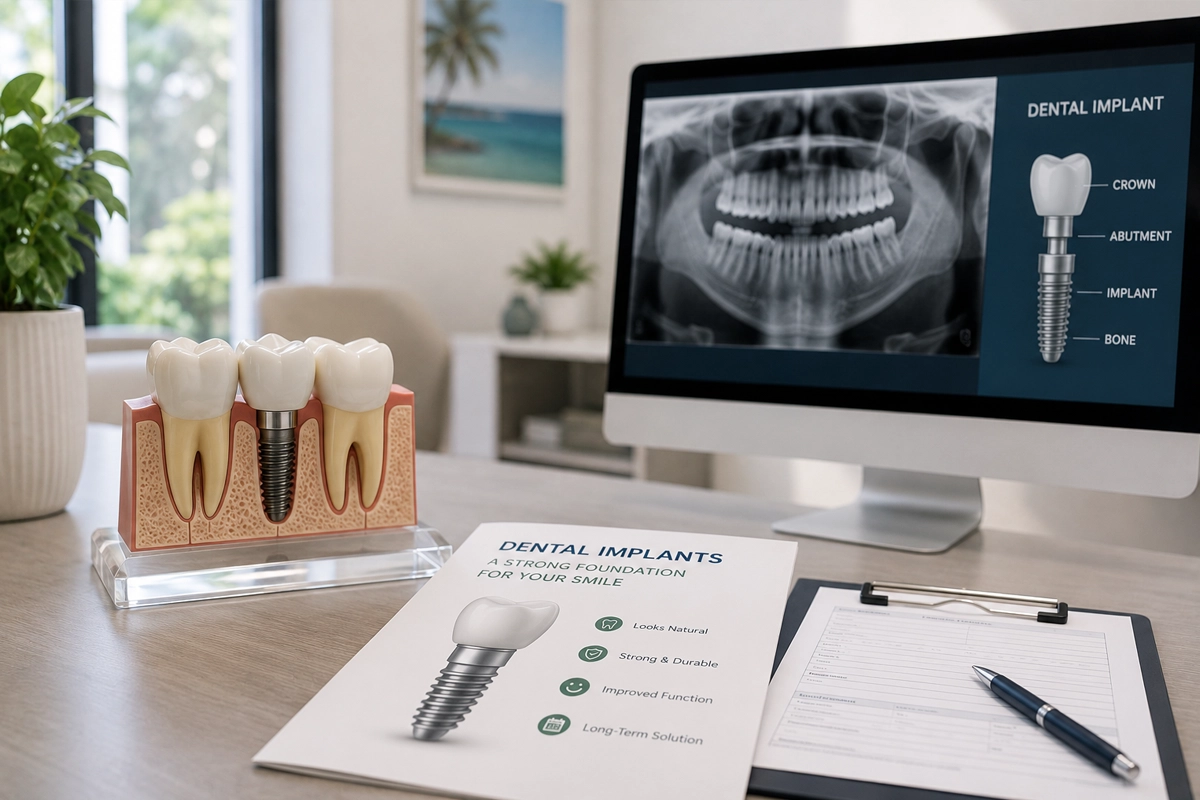
Missing teeth can affect the way you eat, speak, smile, and feel about your oral health. For many patients, dental implants may be an option to help replace missing teeth with a stable, long-term tooth replacement solution.
At Gateway Dental, our team helps patients in Miami, Hialeah, and surrounding Miami-Dade communities understand their dental implant options, treatment steps, insurance questions, and payment considerations before moving forward.
This guide explains what dental implants are, how they may help, and what to ask during your consultation.
What are dental implants?
A dental implant is a small post that is placed into the jawbone to act as an artificial tooth root. Once the implant area heals, it can support a dental restoration such as a crown, bridge, denture, or partial denture, depending on the patient’s needs.
Dental implants are often used to replace:
- One missing tooth
- Several missing teeth
- A full arch of missing teeth
- Teeth that cannot be saved
- Loose or uncomfortable dentures, in some cases
Every patient is different, so a dental exam and imaging are needed to determine whether dental implants may be appropriate.
You can learn more about this service on our implant dentistry page.
Why patients consider dental implants
Patients may ask about dental implants because they want a tooth replacement option that feels more stable than a removable appliance.
Dental implants may help with:
- Replacing missing teeth
- Supporting chewing function
- Filling gaps in the smile
- Supporting crowns, bridges, or dentures
- Improving confidence when speaking or smiling
- Helping maintain jawbone support in the implant area
The best option depends on your oral health, bone support, medical history, budget, and treatment goals.
Who may be a candidate for dental implants?
Dental implant candidacy depends on several factors. Your dentist will need to evaluate your teeth, gums, jawbone, bite, medical history, and treatment goals.
Important factors may include:
- Overall oral health
- Gum health
- Bone volume and bone quality
- Number and location of missing teeth
- Smoking or tobacco use
- Diabetes or other health conditions
- Medications
- History of gum disease
- Ability to maintain good oral hygiene
- Treatment timeline and expectations
Some patients may need additional treatment before implant placement, such as gum treatment, tooth extraction, or bone grafting.
What happens during a dental implant consultation?
A dental implant consultation helps your dental team understand your needs and explain your options.
During the visit, your dentist may:
- Review your medical and dental history
- Ask about your goals and concerns
- Examine your teeth and gums
- Evaluate the missing tooth area
- Recommend X-rays or imaging
- Discuss possible treatment options
- Review estimated treatment steps
- Discuss insurance, financing, and payment information
If you are preparing for your first visit, review our what to bring checklist before your appointment.
Dental implant treatment steps
The dental implant process can vary by patient. In general, treatment may include several steps.
1. Exam and treatment planning
The first step is a dental exam and consultation. Your dentist will evaluate your oral health and discuss whether dental implants may be a good option.
This step may include imaging, review of your bite, and discussion of possible alternatives such as bridges, dentures, or partials.
2. Tooth extraction, if needed
If a damaged or unhealthy tooth needs to be removed, your dentist may recommend a tooth extraction before implant treatment.
In some cases, implant planning can happen around the same time as the extraction. In other cases, the area may need time to heal first.
You can learn more on our tooth extractions page.
3. Bone or gum preparation, if needed
Some patients need additional preparation before implant placement. This may include bone grafting or gum-related care.
The goal is to create healthier support for the implant. Your dentist will explain whether this applies to your situation.
4. Implant placement
During implant placement, the implant post is placed into the jawbone. The area then needs time to heal.
Healing time varies by patient and depends on the treatment plan, bone health, implant location, and other factors.
5. Healing and integration
After placement, the implant needs time to integrate with the surrounding bone. This process helps create a stable foundation for the final restoration.
Your dental team will monitor healing and explain what to expect during this phase.
6. Final restoration
Once the implant is ready, your dentist can plan the final restoration. This may be a crown, bridge, denture, or another implant-supported option.
The final restoration is designed to help restore appearance and function.
Are dental implants painful?
Patients often ask whether dental implant treatment is painful. During the procedure, the area is typically numbed to help keep the patient comfortable.
After treatment, some soreness, swelling, or tenderness may occur as the area heals. Your dental team will provide instructions based on your specific treatment.
If you ever experience severe pain, swelling, bleeding, or symptoms that concern you, call the office directly.
How long do dental implants last?
Dental implants are designed to be a long-term tooth replacement option, but their success depends on oral hygiene, gum health, bite forces, medical factors, and regular dental visits.
To help care for a dental implant, patients should:
- Brush and floss as recommended
- Keep routine dental visits
- Avoid smoking or tobacco use
- Follow home care instructions
- Wear a night guard if recommended
- Report pain, looseness, or swelling early
Like natural teeth, implants and restorations need ongoing care.
Dental implants vs. dentures
Dental implants and dentures are different tooth replacement options.
Dentures are removable appliances that replace missing teeth. Dental implants are placed into the jawbone and can support individual crowns, bridges, or implant-supported dentures.
Some patients choose traditional dentures. Others may benefit from implant-supported options. The right choice depends on your health, goals, budget, and treatment needs.
You can learn more about removable tooth replacement options on our dentures and partials page.
Dental implants vs. dental bridges
A dental bridge can replace a missing tooth by using neighboring teeth for support. A dental implant replaces the missing tooth root and can support a crown without relying on nearby teeth in the same way.
Both options may be appropriate in different situations. Your dentist can explain the advantages and limitations of each option based on your mouth.
Does dental insurance cover dental implants?
Dental insurance coverage for dental implants varies widely. Some plans may offer partial benefits for certain parts of treatment, while others may have exclusions or limitations.
Coverage may depend on:
- Your specific insurance plan
- Reason for tooth loss
- Waiting periods
- Annual maximums
- Missing tooth clauses
- Medical necessity rules
- Whether bone grafting or extractions are needed
- Whether the final restoration is covered
Gateway Dental’s team can help review available insurance information and discuss estimated patient responsibility.
You can also visit our dental insurance information page to learn more.
What if insurance does not cover implants?
If insurance does not cover all or part of implant treatment, financing options may help make care more manageable.
Gateway Dental provides information about payment and financing options that may help patients plan treatment in smaller payments, depending on approval and provider terms.
You can review our dental financing options before your consultation.
Questions to ask about dental implants
Before starting dental implant treatment, consider asking your dentist:
- Am I a candidate for dental implants?
- Do I have enough bone for an implant?
- Do I need a tooth extraction first?
- Do I need bone grafting or gum treatment?
- How many visits may be needed?
- What type of final restoration will I need?
- How long will the process take?
- What are my alternatives?
- What is the estimated cost?
- Will my insurance help cover any part of treatment?
- Are financing options available?
- How should I care for the implant after treatment?
Writing these questions down before your visit can help you feel more prepared.
How to prepare for a dental implant consultation
Before your consultation, bring:
- A valid photo ID
- Dental insurance information, if applicable
- A list of medications
- Medical history information
- Any recent dental X-rays or records
- Questions about treatment, cost, or timing
For more preparation tips, review our first visit guide.
Helpful next steps
If you are considering dental implants, these pages may help:
- Implant dentistry
- Dentures and partials
- Tooth extractions
- Dental insurance information
- Dental financing options
- Gateway Dental locations
Ready to talk about dental implants?
Dental implants can be an important decision, and the best first step is a consultation. Gateway Dental can help you understand your options, review your oral health, and discuss next steps based on your needs.
Call Gateway Dental to schedule a visit at the office that works best for you.
Continue learning about your dental care. Siga aprendiendo sobre su cuidado dental.
Explore more Gateway Dental articles related to patient education, dental visits, and treatment planning. Explore más artículos de Gateway Dental relacionados con educación del paciente, visitas dentales y planificación de tratamiento.

Dental Implants
What to Expect at a Dental Implant Consultation: Evaluation, Questions, and Next Steps
Considering a dental implant? Learn what a consultation may cover, including health history, gum and bone evaluation, treatment options, and costs.

Dental Implants
Can You Get Dental Implants if You Have Gum Disease?
Learn why gum health matters before dental implants, how a history of periodontitis affects planning, and what to discuss before replacing missing teeth.
Restorative Dentistry
Missing Tooth Replacement Options: Implant, Bridge, or Partial Denture?
Compare common ways to replace a missing tooth, including dental implants, fixed bridges, and removable partial dentures, and learn what dentists consider when recommending an option.
Our team is here to help you understand your options. Nuestro equipo está aquí para ayudarle a entender sus opciones.
Call Gateway Dental to schedule a visit or ask questions about services, insurance, financing, or next steps. Llame a Gateway Dental para agendar una visita o hacer preguntas sobre servicios, seguros, financiamiento o próximos pasos.