

Can You Get Dental Implants if You Have Gum Disease?
Learn why gum health matters before dental implants, how a history of periodontitis affects planning, and what to discuss before replacing missing teeth.
Written By Escrito Por
Gateway Dental

Losing a tooth to gum disease can raise a frustrating question: If my gums could not support that tooth, can they support a dental implant?
A history of periodontal disease does not answer the question by itself. What matters is the current condition of the gums and bone, whether disease is controlled, overall health, and the ability to maintain the proposed restoration. The FDA identifies untreated periodontal disease, local infection, smoking, and some systemic health factors among concerns in implant planning and outcomes. FDA: Dental Implants
The practical next step is an assessment, not assuming that you are either automatically eligible or permanently ruled out. This article focuses on preparation before implant treatment. For symptoms around an implant already in place, see our implant warning-signs guide.
First, clarify what “gum disease” means in your case
Gingivitis involves inflammation of the gums. Periodontitis can damage the tissues and bone that support teeth. NIDCR explains that assessment may include checking the gums, measuring pockets around teeth, reviewing health history, and using X-rays to look at supporting bone. NIDCR: Periodontal Disease
Those distinctions matter when discussing replacement teeth. A previous episode of bleeding gums is not the same finding as extensive supporting-bone loss. Equally, the absence of pain is not enough to establish periodontal health.
At an implant consultation, ask what diagnosis is present now and how it was established. Bring records of previous periodontal treatment when available, and explain why the tooth was lost. Avoid relying only on a remembered description such as “I had a deep cleaning years ago.”
Why an implant is not a shortcut around periodontal care
An implant is not a natural tooth, but the tissues around it can still develop disease. The American Academy of Periodontology (AAP) distinguishes peri-implant mucositis, involving inflamed soft tissue, from peri-implantitis, which also affects supporting bone. It identifies a history of periodontal disease as a risk factor. AAP: Peri-Implant Diseases
That is why replacing a lost tooth and caring for the remaining teeth should be part of the same conversation. Ask who will oversee gum-health follow-up and how that care will continue after the implant restoration is fitted.
An implant proposal should explain more than the surgery and the crown. It should also describe how you will clean the area, when it will be reviewed, and which changes deserve a call.
What may need to happen before placement?
Evaluate and treat active disease
Treatment depends on the findings. Nonsurgical periodontal care may include scaling and root planing to remove deposits below the gumline. Some patients need additional treatment or specialist assessment rather than routine cleaning alone. MouthHealthy: Scaling and Root Planing
Ask what the team wants to see before moving to the implant stage and when the response to treatment will be reassessed. A fixed waiting period is less informative than understanding the clinical findings that determine the next step.
Gateway Dental’s oral hygiene services provide a starting point for discussing ongoing care. Our deep-cleaning guide explains the difference between routine cleaning and periodontal treatment.
Assess the available bone
Periodontal disease or other changes can leave an implant site without adequate bone. The AAP explains that ridge-modification procedures may help prepare some sites for implants. Whether grafting is appropriate, and whether it is done before or with another procedure, requires individual planning. AAP: Ridge Modification
Ask what the imaging shows, what additional preparation is proposed, and how that changes the sequence. Bone grafting is not a guarantee that an implant is appropriate or that treatment will succeed.
Review health and healing factors
Tell your dental team about medications, medical conditions, smoking, and previous healing problems. The FDA emphasizes overall health in implant candidacy and notes that smoking may impair healing and long-term success. Uncontrolled diabetes can also increase infection-related risk. FDA: Dental Implants
Do not stop a prescribed medicine or change medical treatment on your own to qualify for an implant. Ask whether coordination with your medical clinician is needed and what information to bring.
What does a history of periodontitis mean for long-term care?
It is a reason for careful planning and monitoring, not a prediction that an individual implant will fail. The AAP’s patient guidance stresses daily cleaning and routine follow-up around implants. A past history of periodontal disease should remain part of the record even when the mouth feels comfortable. AAP: Peri-Implant Diseases
Ask for a maintenance plan tailored to your circumstances. It should be clear which office you will attend, how the tissues will be assessed, and what equipment or technique you should use at home. Demonstrating the cleaning method can be more useful than simply receiving a list of products.
The same conversation should cover the remaining natural teeth. Saving teeth that can be maintained and planning a replacement for a missing tooth are complementary goals, not competing ones.
What if an implant is not the recommended option?
Other replacement categories include bridges and removable dentures. The ADA’s patient guidance describes these as alternatives to discuss according to the missing teeth and the available support. MouthHealthy: Missing Teeth
An alternative does not mean that gum disease can be ignored. Ask how periodontal findings affect the proposed support, cleaning requirements, and expected maintenance of any restoration.
Gateway Dental’s dentures and partials and restorative dentistry pages explain related services. A treatment discussion should leave room for alternatives rather than presenting one product as the inevitable answer.
Bring these questions to your consultation
- Is gum disease active now, and which examination findings support that assessment?
- What needs treatment or reassessment before implant placement?
- Is the available bone suitable, or is further evaluation or preparation needed?
- How will my medical history and previous periodontal treatment affect the plan?
- Who will provide long-term maintenance, and what are the alternatives?
Patients can review Gateway Dental’s implant dentistry service and information for Coral Way or Hialeah before scheduling. The goal is not merely to place a replacement tooth. It is to choose a plan that accounts for the health of the tissues supporting it and the care they will need afterward.
Continue learning about your dental care. Siga aprendiendo sobre su cuidado dental.
Explore more Gateway Dental articles related to patient education, dental visits, and treatment planning. Explore más artículos de Gateway Dental relacionados con educación del paciente, visitas dentales y planificación de tratamiento.

Dental Implants
What to Expect at a Dental Implant Consultation: Evaluation, Questions, and Next Steps
Considering a dental implant? Learn what a consultation may cover, including health history, gum and bone evaluation, treatment options, and costs.

Dental Implants
How to Clean Dental Implants: Daily Care and Professional Maintenance
Learn why dental implants still need plaque control, how cleaning changes by restoration design, and which changes should be checked.
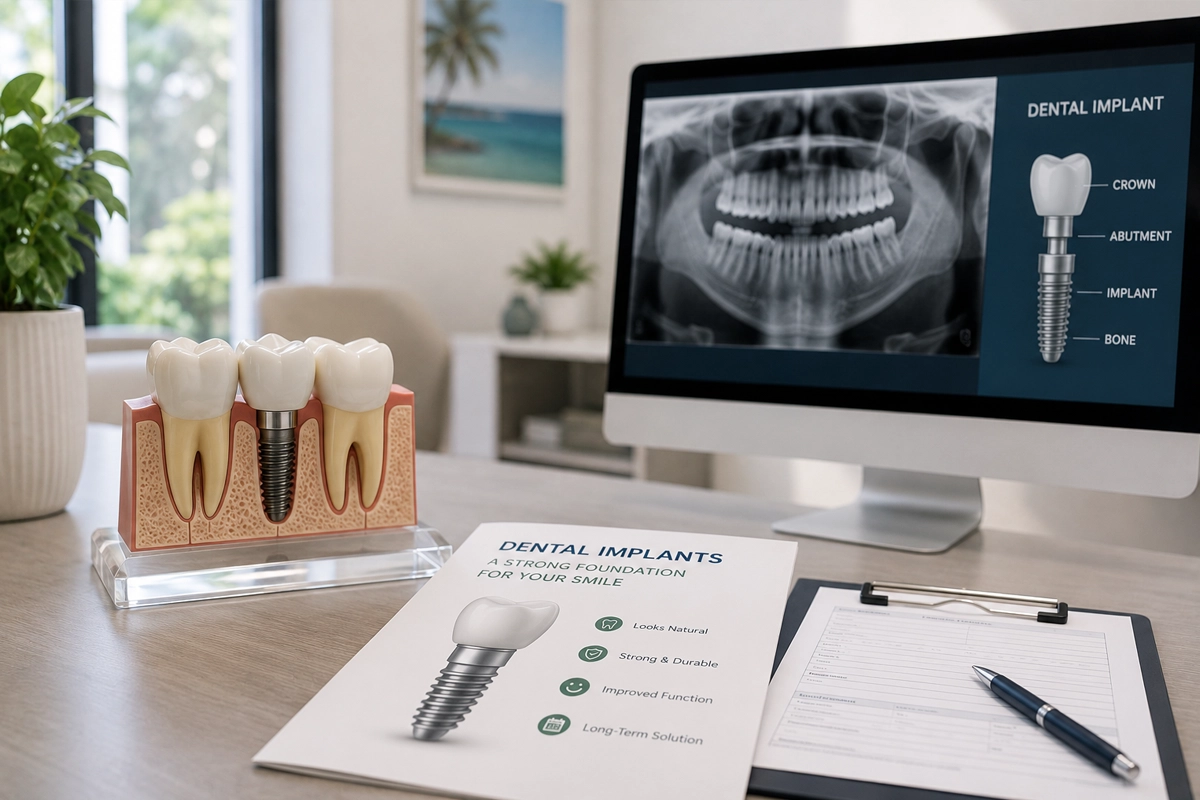
Dental Implants
Dental Implants: What Patients Should Know
Learn what dental implants are, how they may help replace missing teeth, what to expect during the process, and what questions to ask your dentist.
Our team is here to help you understand your options. Nuestro equipo está aquí para ayudarle a entender sus opciones.
Call Gateway Dental to schedule a visit or ask questions about services, insurance, financing, or next steps. Llame a Gateway Dental para agendar una visita o hacer preguntas sobre servicios, seguros, financiamiento o próximos pasos.