

Why Your Dentist Needs Your Medication List Before Treatment
Learn why prescription drugs, over-the-counter medicines, vitamins, and supplements can affect dental care, dry mouth, bleeding, and treatment planning.
Written By Escrito Por
Gateway Dental

A medication list may seem unrelated to a dental cleaning or tooth repair, but it can be an important part of safe treatment planning.
The American Dental Association notes that many prescription and over-the-counter medicines can affect the mouth or influence dental treatment. MouthHealthy: Medications and Oral Health
That is why your dentist needs more than the names of medications you consider “important.”
What should be included on the list?
Bring all current:
- Prescription medicines
- Over-the-counter medicines
- Vitamins
- Herbal products
- Supplements
- Inhalers
- Injectable medications
Include the name, dose, and how often you take each item when possible.
Also tell the dental team about medication allergies and previous adverse reactions.
If your list changes frequently, keeping an updated version on your phone can make appointments easier.
Why do dentists ask about blood thinners?
Anticoagulants and antiplatelet medicines affect clotting.
That matters when planning extractions, periodontal treatment, or other procedures that can cause bleeding.
The key point is that patients should not stop these medicines on their own. The ADA notes that medication changes are often unnecessary for dental procedures and that the risks of stopping therapy must be considered. ADA: Oral Anticoagulant and Antiplatelet Medications
When coordination is needed, the dentist may communicate with the clinician who prescribed the medicine.
How can medications affect dry mouth?
Hundreds of medications can reduce saliva or make the mouth feel dry.
MouthHealthy notes that dry mouth is a common medication side effect and that reduced saliva can increase cavity risk because saliva helps wash away food and neutralize acids. MouthHealthy: Medications and Oral Health
NIDCR also lists medicines for high blood pressure, depression, and bladder-control problems among common causes of dry mouth. NIDCR: Dry Mouth
If dryness began after a medication change, tell your dentist and prescribing clinician. Do not stop the medication without medical advice.
Our dry-mouth and cavity-risk guide explains why persistent symptoms deserve evaluation.
Can medicines affect the gums?
Some medications can contribute to changes in gum tissue, bleeding tendency, or oral infection risk.
The exact effect depends on the drug and the patient’s overall health. That is another reason why the dentist needs the actual medication names instead of a vague statement such as “I take blood-pressure pills.”
Why do vitamins and supplements matter?
Patients sometimes leave supplements off their list because they are sold without a prescription.
But supplements can still interact with medications or affect bleeding and other aspects of care.
Treat the medication list as a complete health list, not only a prescription list.
What if you take medication only occasionally?
Include it if you use it regularly enough that it could overlap with dental treatment.
Examples can include:
- Pain relievers
- Sleep medicines
- Allergy medicines
- Decongestants
- Anti-inflammatory drugs
- Anxiety medicines
Also tell the dentist if you recently completed an antibiotic or steroid course.
Why does the dentist ask about medical conditions too?
Medications make more sense in context.
Conditions such as diabetes, heart disease, kidney disease, liver disease, osteoporosis, pregnancy, cancer treatment, and immune disorders can affect treatment planning, healing, or infection risk.
Your health history and medication list should therefore be updated together.
What if a medication has a dental warning on the label?
Bring the information to the appointment rather than stopping it.
The dentist can determine whether the warning is relevant to the proposed treatment and whether communication with another clinician is necessary.
This is especially important with medicines that affect bone metabolism, immune function, blood clotting, or saliva.
Make medication updates part of every appointment
You do not need to wait for a major procedure.
Tell the office when:
- A medication is started or stopped
- A dose changes
- You develop a new allergy
- You receive a new diagnosis
- You have surgery or hospitalization
- You become pregnant
Gateway Dental’s first-visit information explains other items that can help the team prepare for your appointment. Accurate health information supports safer, more individualized dental care.
Continue learning about your dental care. Siga aprendiendo sobre su cuidado dental.
Explore more Gateway Dental articles related to patient education, dental visits, and treatment planning. Explore más artículos de Gateway Dental relacionados con educación del paciente, visitas dentales y planificación de tratamiento.

Patient Information
What to Expect at Your First Dental Visit
Learn what happens during your first dental visit at Gateway Dental, from check-in and dental exams to X-rays, treatment planning, and next steps.
Patient Information
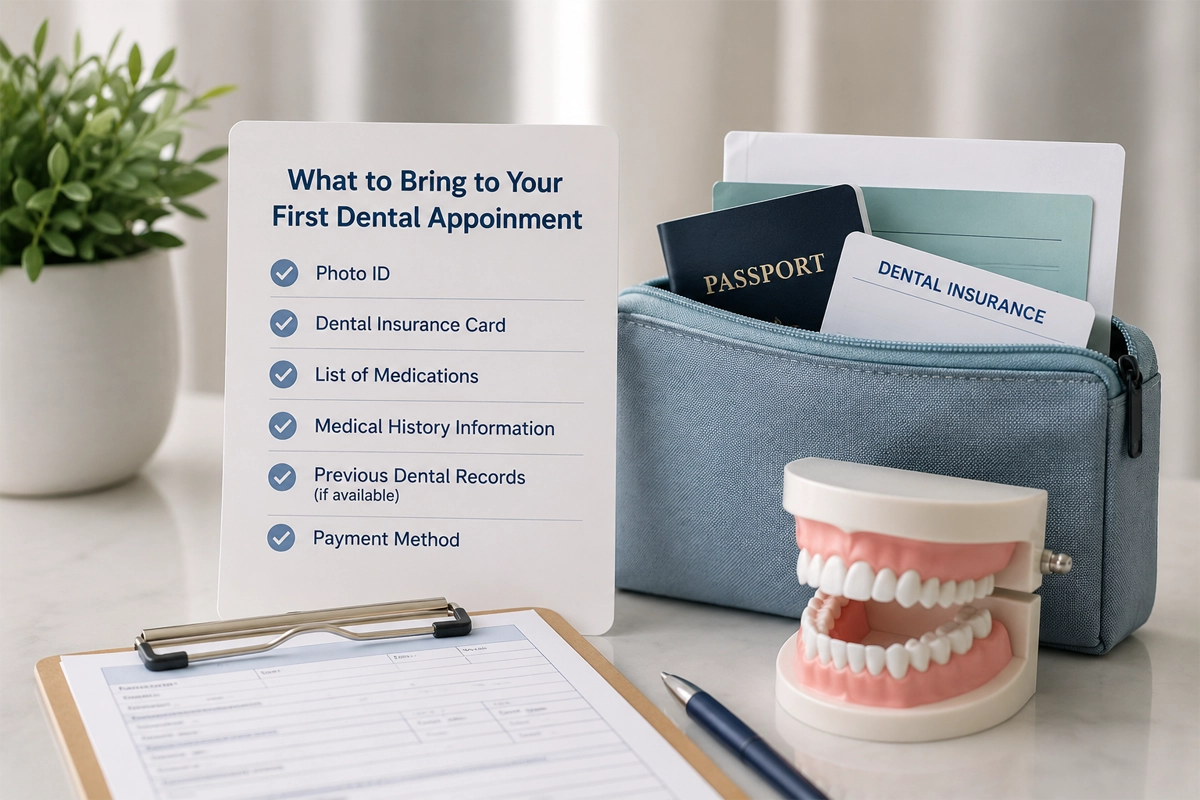
What to Bring to Your First Dental Appointment
Learn what to bring to your first Gateway Dental appointment, including ID, insurance information, medications, dental records, and questions for your dental team.

Tooth Extractions
How to Prepare for a Tooth Extraction: Questions, Medications, and What to Plan
Learn what to discuss before a tooth extraction, why health and medication history matter, and how to prepare for individualized aftercare.
Our team is here to help you understand your options. Nuestro equipo está aquí para ayudarle a entender sus opciones.
Call Gateway Dental to schedule a visit or ask questions about services, insurance, financing, or next steps. Llame a Gateway Dental para agendar una visita o hacer preguntas sobre servicios, seguros, financiamiento o próximos pasos.